Anyone who has analyzed a stack of interviews knows the grind. You record the sessions, send them off to be transcribed, wait, then read every transcript, highlight passages, tag them, group the tags, and slowly assemble the themes. For a dozen interviews that is days of work, and the dread of it is a big reason teams under-invest in qualitative research in the first place.
Automated synthesis collapses that grind. The modern workflow takes you from raw recordings to validated themes in an afternoon instead of a week, with AI-assisted analysis delivering roughly two-thirds time savings over the manual approach. This is a walkthrough of how that workflow actually runs, step by step, and how to keep it rigorous rather than just fast.
The old workflow vs the new one
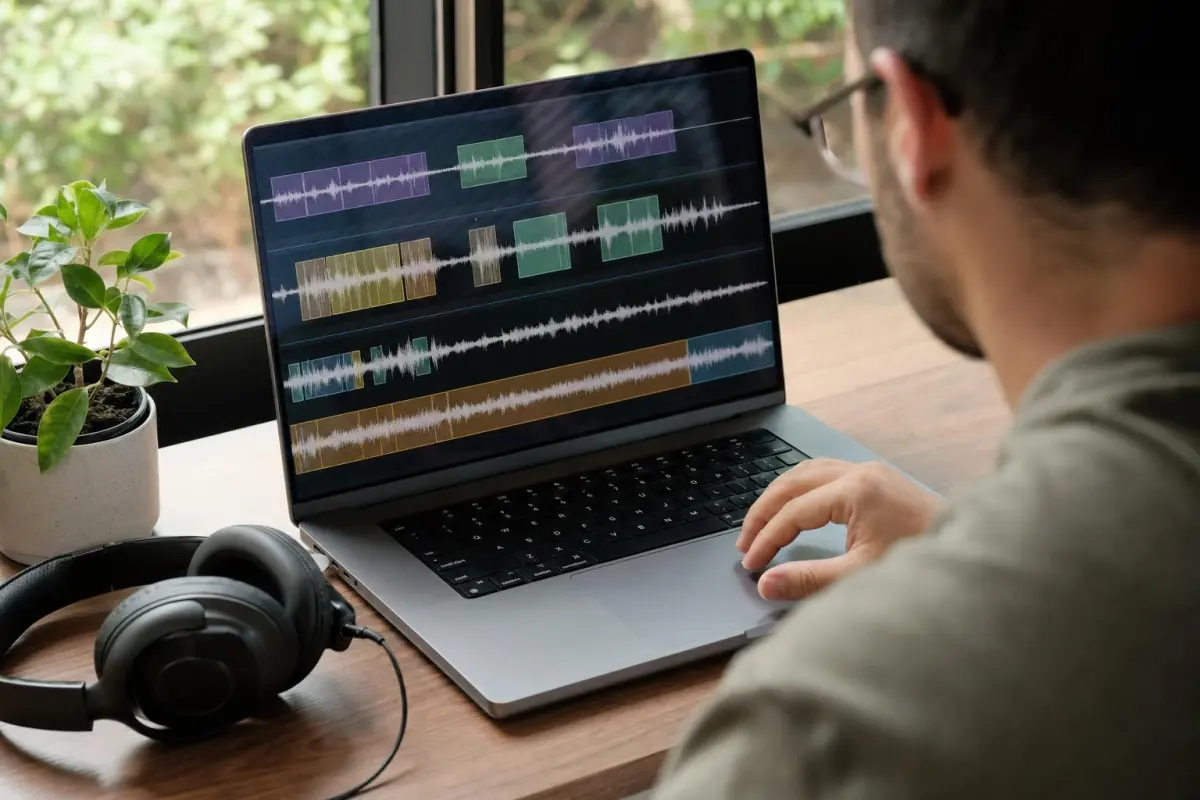
The traditional path runs record, transcribe (or pay to), read everything, code by hand, cluster by hand, write up. Several days, most of it mechanical.
The automated path is different. The interviews arrive already transcribed, AI proposes the codes and surfaces candidate themes, and you spend your time verifying and interpreting rather than transcribing and tagging. The human effort moves off the mechanical work, which the machine does well, and onto the judgment work, which it does not. You keep the rigor at a fraction of the hours.
Step 1: Capture, transcribed automatically
It starts at collection. When you run interviews through a modern platform, transcription is not a separate paid step with a turnaround time. It happens automatically, accurately, often as the session ends. If you run AI-moderated interviews, the recording, transcript, and structured notes all land together the moment a participant finishes, with nothing to upload or send off.
That alone removes the first multi-day delay in the old process. By the time you sit down to analyze, the raw material is already clean text, tied to who said what and when.
Step 2: Automatic first-pass coding
Next, AI reads across the full set of transcripts and proposes an initial round of codes, labeling every passage about pricing, every mention of a workaround, every moment of confusion. This is the step that used to consume the most hours, and it now takes minutes.
Your job here is editor, not laborer. Read the proposed codes against the transcripts, merge the redundant ones, cut the noise, and correct the misreads. The AI gives you a complete first pass in minutes, and you make it correct. That trade, minutes of machine work plus your judgment, is the core of the speedup.
Step 3: Themes surfaced from the codes
With the data coded, AI clusters related codes into candidate themes and shows you where the patterns concentrate. Across a large set of interviews, this catches connections that are genuinely hard to hold in your head.
Treat these as candidates. The AI is pointing at where the signal seems to be, and you are deciding which candidates are real, meaningful themes and which are surface-level coincidence. This is the thematic analysis discipline applied at speed: stay open to what emerges, but keep a skeptic's eye.
Step 4: Verify every theme against the source
This is the step you never skip, the one that separates rigorous automated synthesis from letting a model hand you conclusions. For each theme, go back to the transcripts and confirm it actually holds. Does the pattern appear across many participants, or did two vivid quotes make it look bigger than it is? A theme you cannot trace back to real, repeated quotes gets cut, no matter how plausible it sounded.
Good tooling makes this fast by keeping every theme linked to the exact moments it came from, so verification is a click rather than a hunt. The principle is simple and non-negotiable: do not trust a theme you have not personally traced to real participant quotes.
Step 5: Pull quotes and draft the write-up
Once your themes are verified, AI helps assemble the deliverable, pulling the supporting quotes for each theme and drafting the narrative. You refine the framing, name the themes precisely, and lead with what the findings mean for the business rather than just what users said. Our guide on translating insights into business metrics covers how to make that write-up land with stakeholders.
What you end up with is a quote-backed, themed, business-framed report, produced in an afternoon from interviews that finished that morning.
The one rule that keeps it honest
Speed is only an asset if the output is true. Two guardrails keep automated synthesis rigorous:
- Verify before you trust. Every theme traces back to real quotes, or it does not ship.
- Analyze real data only. Run automated synthesis on synthetic users and you get fast processing of fabricated input, which is worse than slow because it looks credible. The walkthrough above is for real conversations with real people.
Hold those two lines and automation gives you speed without costing you trust.
Where this fits at User Evaluation
User Evaluation runs this entire walkthrough in one place. AI-moderated interviews arrive transcribed, AI-assisted synthesis proposes the codes and themes, and every theme stays linked to the exact participant moment it came from, so verification is fast and the path from recording to validated, quote-backed themes really does fit in an afternoon. Collection and analysis live together, which is what removes the hand-offs that used to make qualitative analysis a week-long chore.
What you keep, and what you hand off
Automated synthesis turns the slowest, most dreaded part of qualitative research into an afternoon's work. AI does the mechanical coding and clustering while you do the verifying and interpreting. Capture transcribes itself, AI proposes codes and themes, you check each one against real quotes, and the write-up assembles around your judgment. Keep the two rules, verify before trusting and analyze only real data, and you get the speed of automation with the rigor that makes research worth doing.