Unmoderated usability testing has always come with one built-in flaw. You send a task to a participant, they work through it on their own, and you get to watch what they did. What you never got was the why, because nobody was there to ask. A participant pauses for ten seconds on the checkout screen, frowns, then finds the button, and you are left guessing whether that pause meant confusion, distraction, or careful reading.
For years that was the price of scale. Moderated sessions gave you the why but capped you at a handful of interviews. Unmoderated sessions gave you volume but went silent at the exact moment a good moderator would have leaned in. AI follow-up questions are starting to remove that compromise. This piece explains how, what the research actually shows about how well it works, and where it still comes up short.
The weakness, stated plainly
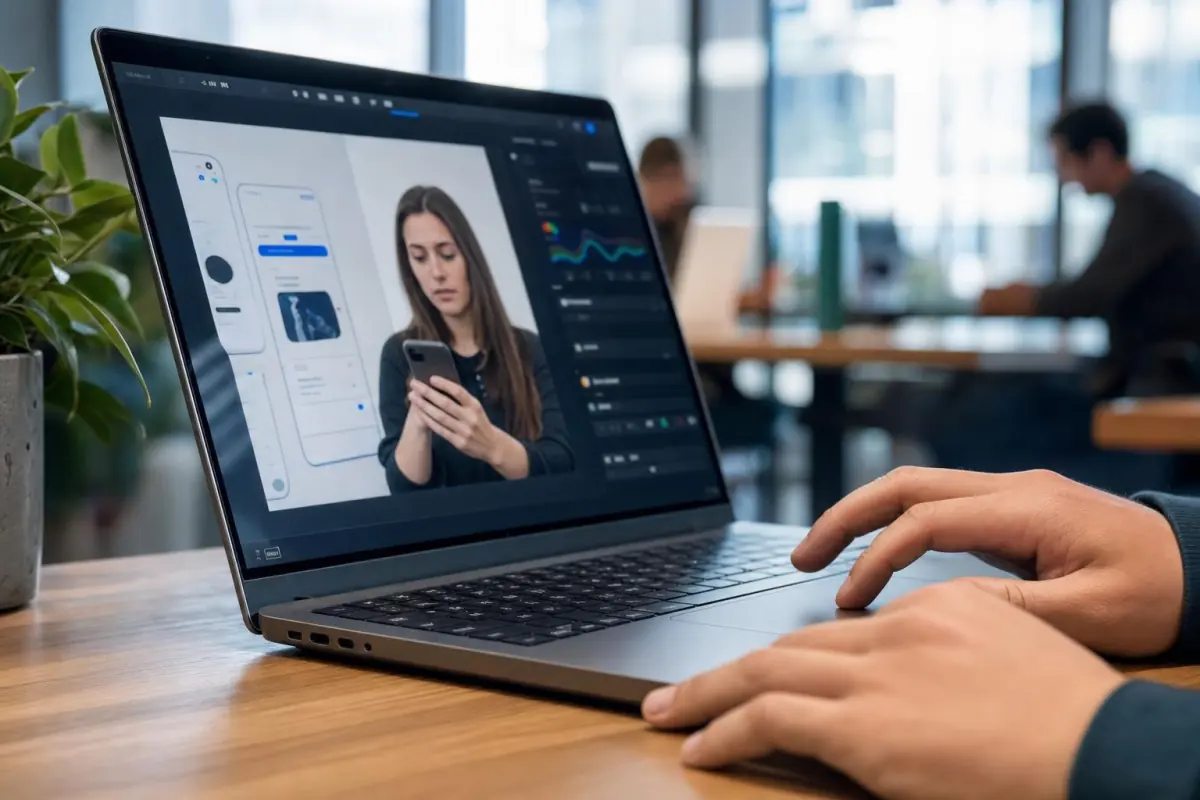
The strength of unmoderated testing is also the source of its weakness: there is no human in the session. That makes it fast, cheap, and free of moderator bias, and it means you can run dozens of sessions in the time one moderated interview takes. It also means that when a participant does something interesting, the moment passes unexamined. You see the behavior, but you never hear the reason.
Researchers have patched around this for years with clunky workarounds: post-task survey questions that arrive too late, think-aloud instructions that participants forget, follow-up emails that mostly go unanswered. None of them recover the thing you actually wanted, which is a question asked in the moment, about the thing that just happened.
What AI follow-ups change
AI follow-up questions put a probe back into the unmoderated session without putting a human in it. The system watches the session as it happens and asks a contextual question when the participant's behavior suggests there is something worth surfacing.
In practice it looks like this. The participant hesitates, pausing for several seconds on a screen, swiping back and forth without committing, or narrating their confusion out loud. The AI notices and asks: "I noticed you paused on that screen. What were you looking at?" The participant answers in their own words, by voice or text, and you get the why you would otherwise have lost, attached to the exact behavior that prompted it.
The trigger is the key idea. Instead of asking everyone the same canned question at the end, the AI reacts to hesitation and deviation in real time and generates a probe specific to that moment. Platforms have been adding this over the last couple of years, and it has quickly become a standard feature rather than a novelty. The promise is to close the qualitative depth gap while keeping the scale and speed that made unmoderated testing worth running in the first place.
What the evidence actually shows
This is where honesty matters more than hype, because the research is genuinely mixed, and you should know that before you lean on the method.
The good news is that AI follow-ups work at the basic level: they reliably get participants to say more. Studies confirm the dynamic follow-up questions succeed at eliciting additional feedback that the session would not otherwise have captured. People respond to the probes, and you end up with more qualitative material than a silent unmoderated test would produce.
The caveat is real. One academic evaluation of AI-generated follow-up questions in unmoderated studies found that while the extra questions did draw out more feedback, it was rare for that feedback to reveal genuinely deeper insight. The AI's questions were not as penetrating as the ones a skilled human facilitator would have asked. So AI follow-ups reliably get you more, but not always deeper. They close part of the gap, not all of it.
That is the accurate picture as of 2026: a meaningful improvement over silent unmoderated testing, and still short of what a sharp human moderator pulls off. The quality of the probes is improving quickly, though it is not solved.
When to use AI follow-ups (and when to reach for a human)
The honest framing leads to a clear rule of thumb.
Use AI follow-ups in unmoderated tests when:
- You are running usability tasks at volume and want the why behind common behaviors without scheduling live sessions.
- The product and tasks are well-defined, so a contextual probe like "what were you expecting there?" is genuinely useful.
- You want continuous, always-on testing where live moderation is not affordable at that cadence.
- You are validating a flow and need to catch the predictable friction points, not map an unknown problem space.
Reach for a human moderator when:
- The study is exploratory and the most valuable questions are ones you could not have anticipated.
- The topic is sensitive, where trust and empathy change what people are willing to say.
- The insight depends on deep back-and-forth that needs a person to recognize a faint signal and chase it.
A practical guideline from the field: if a participant needs even thirty seconds of orientation to attempt the task, run it moderated first. Anything cleaner than that is a good candidate for unmoderated testing with AI probes.
The bigger picture: methods are converging
Step back and you can see what is really happening. The old, clean split between moderated and unmoderated testing is blurring. Unmoderated tests are gaining a voice through AI follow-ups, while AI-moderated interviews bring interview-grade probing to a scale that used to be survey territory. The categories are bleeding into each other.
The right way to think about it is not "moderated versus unmoderated" but a spectrum of how much real-time probing a study needs, and how much scale. AI follow-ups let you dial in a useful middle: more depth than a silent unmoderated test, more scale than a human-moderated one. If you want the fuller version of that argument, our decision framework for AI versus human moderation lays out where each one wins, and our overview of AI-moderated interviews covers the deeper end of the same spectrum.
How to get good probes out of it
To get the most from AI follow-ups, set them up with intent rather than leaving everything to defaults.
- Define what counts as a moment. Tell the system which behaviors deserve a probe: long pauses, back-navigation, repeated attempts, signs of confusion in narration.
- Keep probes open. "What were you expecting to happen?" beats "Was that confusing?" The first invites a real answer; the second invites a yes.
- Cap the interruptions. Too many probes turn a usability test into an interrogation and change the behavior you are trying to observe. Reserve them for the moments that matter.
- Read the probe-and-answer pairs together. The value is in the behavior plus the reason side by side, not in either one alone.
Where this fits at User Evaluation
User Evaluation runs AI-moderated sessions with real-time follow-ups, so your unmoderated tests can ask the why in the moment instead of going quiet, and the responses move straight into analysis with the rest of your study. You keep the scale of unmoderated testing and recover much of the depth a live moderator used to be the only way to get.
Where this leaves you
AI follow-up questions fix the defining weakness of unmoderated usability testing: the silence at the moment that matters. They reliably pull more out of participants, and the depth of those probes is improving fast, though it has not yet caught a skilled human. Use them to add the why to high-volume, well-defined testing, keep a human on the exploratory and sensitive work, and treat the line between moderated and unmoderated as the spectrum it has quietly become.